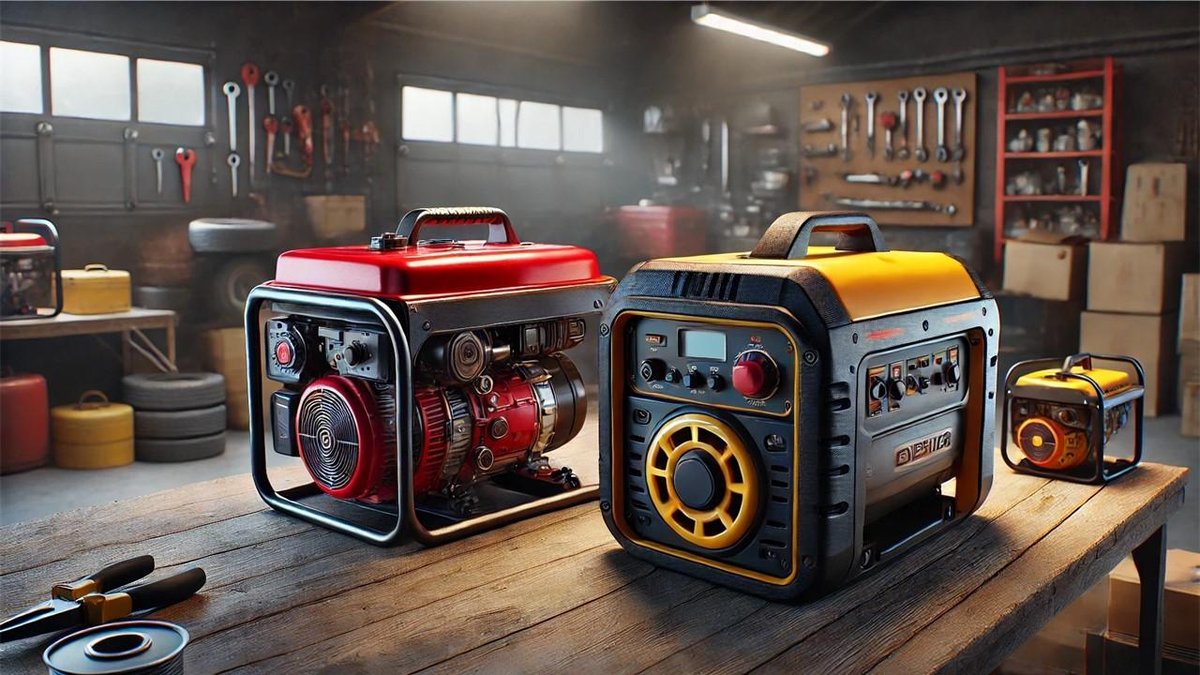
When the lights go out, or you’re off-grid seeking adventure, reliable power isn’t just a convenience—it’s a necessity. But not all portable power is created equal. Understanding and choosing inverter generators means stepping into a world where quiet operation, fuel efficiency, and pristine power quality are the new standard, leaving behind the noisy, fuel-guzzling machines of yesteryear. This guide will equip you with the knowledge to make a smart power decision, whether you’re safeguarding your home or exploring the great outdoors.
At a Glance: Why Inverter Generators Lead the Pack
- Clean Power: Perfect for sensitive electronics like laptops, phones, and medical devices.
- Whisper Quiet: Significantly quieter than traditional generators, ideal for neighborhoods and campsites.
- Fuel Savvy: Adjust engine speed to match power demand, saving you money on gas.
- Highly Portable: Lighter, more compact designs make them easy to carry and store.
- Eco-Friendlier: Lower emissions, especially when paired with renewable sources.
- Smart Investment: Higher initial cost often recouped by lower operating and maintenance expenses.
The Evolution of Portable Power: Why Inverter Generators Matter Now More Than Ever
For decades, portable power meant a rumbling engine, a cloud of exhaust, and the distinct hum of a traditional generator. These workhorses delivered raw power, suitable for job sites and demanding appliances, but often at the expense of peace and quiet, and with a significant thirst for fuel.
Enter the inverter generator. This isn't just an incremental improvement; it's a fundamental reimagining of portable power. Inverter generators leverage advanced electronic circuitry to produce electricity, offering a suite of benefits that address the shortcomings of their conventional counterparts. They've become the go-to solution for anyone needing stable, efficient, and quiet power for modern life—from powering a remote cabin to keeping critical medical devices running during an outage.
Inverter Generators vs. Conventional: A Head-to-Head Showdown
To truly appreciate what an inverter generator brings to the table, let's stack it against the traditional generator. It’s not about which is "better" universally, but which is superior for your specific needs.
1. Power Quality: Pristine vs. Raw
Imagine plugging your high-end laptop directly into a power source that fluctuates wildly. That's a risk with conventional generators.
- Inverter Generators: These marvels convert direct current (DC) from a battery into alternating current (AC) through a multi-step process, creating a pure sine wave output. This power is exceptionally stable and clean, mirroring the electricity you get from your wall outlets. It's crucial for sensitive electronics, ensuring they operate safely without risk of damage or malfunction. Think of it like serving gourmet coffee versus a generic instant brew—both provide caffeine, but one is far more refined. When you need to safely power your sensitive electronics, an inverter is your only real choice.
- Conventional Generators: They produce electricity directly from a mechanical engine, often resulting in "dirty" power—meaning voltage fluctuations and frequency variations. While perfectly fine for power tools, lights, or resistance heaters, this raw power can confuse or even harm delicate microprocessors found in laptops, smart TVs, medical equipment, and modern appliances.
2. Fuel Efficiency: Sip vs. Guzzle
Nobody wants to spend more than necessary on fuel, especially during an extended power outage or a long camping trip.
- Inverter Generators: Their secret sauce lies in variable engine speed. Instead of constantly running at full throttle, an inverter generator's engine revs up or down to match the power demand. If you're only charging a phone, it sips fuel. If you're running a microwave, it ramps up. This intelligent design makes them remarkably fuel-efficient, often consuming significantly less fuel than a conventional generator for the same output.
- Conventional Generators: These machines run at a constant, high speed (typically 3600 RPM for 60Hz power) regardless of the load. Whether you're powering a single light bulb or a full construction site, the engine works just as hard, leading to higher, constant fuel consumption and more frequent refueling stops.
3. Noise Level: Whisper vs. Roar
Peace and quiet are priceless, especially when enjoying nature or dealing with a power outage.
- Inverter Generators: Thanks to their enclosed designs, advanced mufflers, and the variable engine speed, inverter generators operate at significantly lower decibel levels—often comparable to a normal conversation (50-60 dB). This makes them ideal for campgrounds, residential areas, tailgating events, or any situation where noise would be a nuisance.
- Conventional Generators: They are notorious for their loud operation, often reaching 70-80 dB or more. That's louder than a vacuum cleaner and can quickly become a disturbance, making conversations difficult and irritating neighbors or fellow campers.
4. Portability: Grab-and-Go vs. Heavy Haul
Moving your power source shouldn't require a forklift.
- Inverter Generators: Their compact size and lighter components (including smaller engines and alternators) mean they are far more portable. Many models feature convenient carrying handles, making them easy for one person to transport and store. This makes them perfect for scenarios like portable power for camping and outdoor adventures or moving between different areas of your property.
- Conventional Generators: Built with robust, larger engines and heavy-duty frames, conventional generators are often cumbersome and require significant effort or even wheels to move around. Storage also becomes a bigger consideration due to their larger footprint.
5. Emissions: Cleaner Air for All
Our environmental footprint is increasingly important.
- Inverter Generators: By burning less fuel due to their efficiency, they inherently produce fewer emissions. Furthermore, many models are designed to be more environmentally friendly, meeting stricter emissions standards. When paired with renewable energy sources like solar, some inverter systems can offer zero-emission power.
- Conventional Generators: Running on fossil fuels like gasoline or diesel, they release harmful gases such as carbon monoxide, nitrogen oxides, and hydrocarbons. These contribute to air pollution and can be dangerous in enclosed spaces, necessitating strict ventilation and essential generator safety guidelines.
6. Cost & Durability: Investment vs. Running Costs
The price tag isn't the whole story; consider the total cost of ownership.
- Inverter Generators: Generally, the initial purchase price for an inverter generator is higher due to the sophisticated technology packed inside. However, their superior fuel efficiency and fewer moving parts often translate to lower long-term operating costs and less frequent maintenance. They are built for longevity with smart protective features.
- Conventional Generators: While often cheaper upfront, their constant high-speed operation, higher fuel consumption, and more frequent maintenance requirements (oil changes, spark plugs, air filters) can lead to higher overall lifetime costs. They are durable workhorses, but demand consistent upkeep.
Quick Comparison Table: Inverter vs. Conventional Generator
| Feature | Inverter Generator | Conventional Generator |
| :---------------- | :------------------------------------------------ | :--------------------------------------------------- |
| Power Quality | Clean, stable, pure sine wave | Raw power, potential surges, voltage fluctuations |
| Fuel Efficiency | Highly efficient (variable engine speed) | Less efficient (constant engine speed) |
| Noise Level | Quiet (50-60 dB) | Noisy (70-80+ dB) |
| Portability | Compact, lightweight, easy to carry | Heavier, larger, requires more effort to move |
| Emissions | Lower due to efficiency; cleaner | Higher due to constant fuel burn |
| Cost (Initial) | Higher | Lower |
| Cost (Running) | Lower (fuel + maintenance) | Higher (fuel + maintenance) |
| Ideal For | Sensitive electronics, camping, home backup, RVs | Heavy-duty tools, construction, large appliances |
The Anatomy of Smart Power: How Inverter Generators Work (Simply Explained)
At its heart, an inverter generator isn't a magical device, but a clever one. Here's the simplified breakdown:
- AC to DC: The generator's engine powers an alternator, which initially produces high-frequency alternating current (AC).
- DC Conversion: This AC power is then rectified, or converted, into direct current (DC).
- Inversion to Clean AC: The "inverter" component then takes this DC power and electronically inverts it back into stable alternating current (AC) at a usable frequency (60 Hz for North America) and voltage (120V). During this step, the power waveform is smoothed out into that pristine pure sine wave.
This multi-step process, especially the electronic inversion, allows the engine to run at varying speeds. The system controls the output, ensuring consistent power regardless of engine RPM. It’s like having a dedicated power conditioner built right into your generator.
Who Needs an Inverter Generator? Ideal Use Cases
Inverter generators excel in scenarios where power quality, quiet operation, and portability are paramount.
- Essential Home Backup: Keep your refrigerator running, charge your phones and laptops, power a few lights, and even operate a fan during an outage. For critical medical equipment that relies on stable power, an inverter generator is non-negotiable.
- Camping & RVing: Enjoy all the comforts of home without disturbing nature (or your neighbors). Run small appliances, charge devices, and power your RV's electronics quietly.
- Tailgating & Outdoor Events: Power blenders, TVs, speakers, and portable grills without the intrusive roar of a traditional generator, making for a much more enjoyable experience.
- Sensitive Electronics: Laptops, tablets, smartphones, smart TVs, gaming consoles, drones, and camera equipment all thrive on the clean, stable power an inverter generator provides.
- Small Business & Remote Work: If you work remotely or run a small mobile business, an inverter generator ensures your sensitive equipment and internet access remain operational, no matter where you are.
- DIY & Light Construction: While not for heavy-duty tools, an inverter can power drills, chargers, and smaller saws at a remote site.
Navigating Your Choices: Key Factors for Selecting the Perfect Inverter Generator
With a clear understanding of the benefits, how do you pick the right one? Here's your decision framework:
1. Power Output Required (Wattage): Match Your Needs
This is the most critical step. You need enough power to run your essential devices, but overbuying means unnecessary cost and weight.
- Determine Your Needs: List all the devices you plan to power simultaneously.
- Starting vs. Running Watts: Note that many appliances (especially those with motors) require a higher "starting wattage" (surge watts) for a few seconds than their continuous "running wattage."
- Example: A refrigerator might run at 600 watts but require 1800 watts to start its compressor.
- Calculation: Add up the running watts of all devices you'll use at once. Then, identify the single device with the highest starting wattage and add that difference to your total running watts.
- Pro Tip: Look at the labels on your appliances or search online for their wattage requirements. When in doubt, round up.
- Capacity: Most inverter generators range from 1,000 to 4,000 running watts, though larger models exist. For small essentials like camping, 1,000-2,000 watts might suffice. For substantial home backup, aim for 3,000-4,000+ watts.
2. Usage Scenarios: Where and How Will You Use It?
The "how" and "where" significantly influence your ideal model.
- Camping/Tailgating: Focus on minimal noise, portability, and sufficient power for basic electronics and small appliances.
- Home Backup: You'll likely need more wattage, potentially parallel capability, and ease of storage. Consider dual-fuel options for flexibility.
- RVing: Look for models specifically designed for RV use, often with dedicated RV outlets and good fuel efficiency for longer trips.
- Sensitive Electronics: Ensure the model explicitly states "pure sine wave" output (which most inverter generators do).
3. Portability & Noise Level: Your Comfort Zone
These two often go hand-in-hand with inverter generators.
- Weight & Size: If you plan to move it frequently (e.g., in and out of a car trunk, around a campsite), lighter and more compact is better. Some models feature wheels and telescoping handles.
- Decibel Rating (dB): Check the specified noise level. Manufacturers usually list the dB at a quarter load and 7 meters (about 23 feet). Anything below 60 dB is generally considered quiet. For highly sensitive environments, aim for the mid-50s.
4. Budget & Long-Term Value: Initial Cost vs. Total Cost of Ownership
Don't let a higher upfront price scare you away from a better long-term investment.
- Initial Cost: Inverter generators generally cost more than conventional generators of comparable wattage. Prices typically range from $400 for small models to over $2,000 for high-output, feature-rich units.
- Fuel Savings: Factor in how much you'll save on gasoline over the lifespan of the generator due to its efficiency.
- Maintenance: Inverters often require less frequent maintenance due to their variable speed operation and fewer moving parts under constant stress. Remember to check out maintenance tips for your inverter generator to keep your unit running smoothly.
- Resale Value: Quality inverter generators tend to hold their value better due to their desirability and advanced features.
5. Environmental Impact: Making a Greener Choice
If sustainability is a priority, inverter generators offer a better path.
- Emissions Standards: Look for models that meet California Air Resources Board (CARB) compliance, indicating lower emissions.
- Dual Fuel Options: Many inverter generators can run on both gasoline and propane. Propane burns cleaner, has a longer shelf life, and often has a lower carbon footprint than gasoline.
6. Safety Features: Non-Negotiables for Peace of Mind
Prioritize these features to protect yourself, your devices, and your generator.
- Overload Protection: Automatically shuts off the generator if the connected load exceeds its capacity, preventing damage to the generator and appliances.
- Low Oil Shut-off: Prevents engine damage by turning off the generator if the oil level drops too low.
- CO Sensor: Shuts down the generator if dangerous levels of carbon monoxide are detected (a crucial safety feature for any generator).
- Spark Arrestor: Prevents sparks from exiting the exhaust, especially important for use in wooded areas to mitigate fire risk.
Beyond the Basics: Advanced Features & Considerations
Once you've nailed down the essentials, consider these extra perks:
- Parallel Capability: Many inverter generators can be linked together with a parallel kit to double their power output. This is a fantastic feature if you anticipate needing more power in the future without buying one massive, heavy generator. For instance, two 2,000-watt units can combine to provide 4,000 watts.
- Dual Fuel Options: As mentioned, the ability to switch between gasoline and propane offers flexibility, cleaner burning, and longer fuel storage potential.
- Remote Start/Electric Start: Some models offer key fob remote start or push-button electric start, eliminating the need for a pull cord, which is especially handy in cold weather or for those with limited physical strength.
- Fuel Gauge: Simple but incredibly useful for monitoring fuel levels without guessing.
- Data Center/Digital Display: Provides real-time information on power output, fuel level, run time, and maintenance alerts.
Common Questions About Inverter Generators
Q: Can an inverter generator power my entire house?
A: Not typically. Most inverter generators are designed for essential circuits or specific appliances. To power an entire house, you would likely need a large standby generator. However, multiple parallel-capable inverter generators can collectively power a significant portion of a home.
Q: Do inverter generators require special fuel?
A: No, most inverter generators run on standard unleaded gasoline. Many also offer dual-fuel capability, allowing them to run on propane as well. Always use fresh, high-quality fuel and consider a fuel stabilizer for long-term storage.
Q: Are inverter generators safe to use indoors?
A: Absolutely NOT. Like all gasoline or propane-powered generators, inverter generators produce carbon monoxide (CO), an odorless, colorless, and deadly gas. They must always be operated outdoors in a well-ventilated area, far away from windows, doors, and vents that could allow CO to enter living spaces. Even with a CO sensor, outdoor use is paramount.
Q: How loud is "quiet" for an inverter generator?
A: "Quiet" for an inverter generator typically means between 50 and 60 decibels (dB) at a 25% load and 7 meters distance. To put that in perspective:
- 40 dB: Quiet library, refrigerator hum
- 50 dB: Quiet conversation, light rainfall
- 60 dB: Normal conversation, air conditioner (from 100 ft)
- 70 dB: Vacuum cleaner, busy street
A conventional generator often operates in the 70-80 dB range, which is significantly louder and more intrusive.
Q: What's the average lifespan of an inverter generator?
A: With proper maintenance and care, an inverter generator can last for many hundreds, if not thousands, of hours of operation. Their variable engine speed often means less wear and tear compared to conventional generators running at constant high RPMs.
Making the Smart Power Move: Your Next Steps
You're now armed with the insights needed to confidently navigate the world of inverter generators. You understand their unique advantages, how they stack up against conventional models, and the critical factors to consider before making a purchase.
Whether your primary concern is safeguarding sensitive electronics, enjoying a peaceful camping trip, or ensuring essential home backup, an inverter generator offers a superior solution. The investment in clean, quiet, and efficient power pays dividends in convenience, peace of mind, and long-term savings.
Ready to find the perfect power partner for your needs? You can Shop inverter generators for sale and explore the wide range of models available, keeping in mind the factors we've discussed. Choosing an inverter generator isn't just buying a machine; it's investing in smarter, more reliable power for modern living.