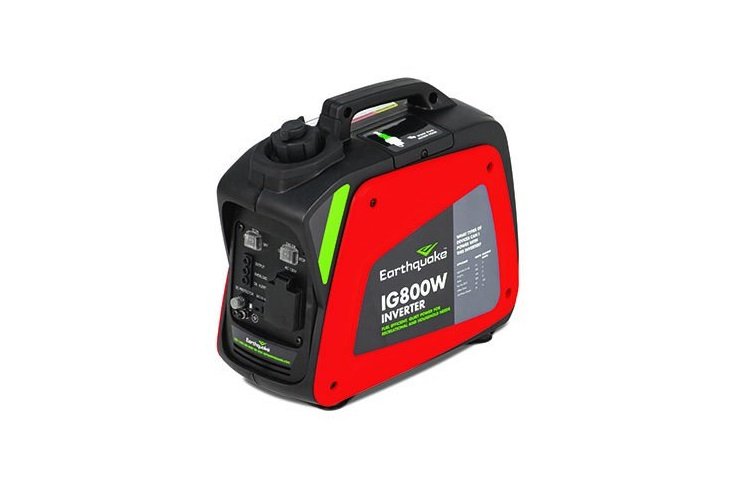
Whether you're prepping for a power outage, heading out on an RV adventure, or powering up a remote job site, choosing the right inverter generator is a game-changer. These aren't your grandpa's noisy, gas-guzzling monsters; modern inverter generators offer quiet, efficient, and super-clean power, making them ideal for everything from sensitive electronics to essential home appliances. But with so many options, how do you cut through the marketing noise to find the Top Rated & Best Inverter Generators By Brand?
We've done the heavy lifting, digging deep into testing methodologies from trusted sources like Bob Vila and Consumer Reports, and putting some of the best models through their paces. This guide will walk you through what makes an inverter generator truly shine and introduce you to the standout brands that deliver on their promises.
At a Glance: What You Need to Know
- Clean Power for Sensitive Electronics: Unlike traditional generators, inverters provide stable, clean electricity, making them safe for laptops, smartphones, and even medical devices.
- Quieter Operation: Expect noise levels typically between 50-60 decibels – comparable to a normal conversation or a quiet dishwasher.
- Fuel Efficiency: They adjust engine speed to match power demand, saving fuel and extending run times.
- Portability: Many models are designed to be lightweight and compact, often with handles or wheels for easy transport.
- Higher Cost, Greater Value: While generally more expensive upfront, their benefits in noise, efficiency, and power quality often outweigh the initial investment.
- Safety First: Look for models with Carbon Monoxide (CO) safety shutoff technology and always operate generators at least 20 feet from any dwelling.
Why Inverter Generators Lead the Pack
Forget the stereotypes of loud, sputtering power sources. Inverter generators are a different breed entirely. They're like the smart, efficient cousins in the generator family, using advanced computer controls to produce exactly the power you need, when you need it.
This intelligence translates into several key advantages:
- Whisper-Quiet Performance: Imagine running a generator that sounds more like a gentle hum than a roar. Inverters achieve this by varying engine speed. When your power demand is low, the engine idles down, dramatically cutting noise. Most operate in the 50-60 decibel range, a far cry from the ear-splitting 100+ decibels of many traditional open-frame units.
- Impeccable Power Quality: Sensitive electronics, from laptops to CPAP machines, demand "clean" power – electricity free of voltage spikes and drops. Inverters deliver this in spades, making them the only safe choice for your most delicate gear. You wouldn't plug your smartphone into an erratic power source, and you shouldn't ask your expensive electronics to tolerate anything less than an inverter's stable output.
- Serious Fuel Savings: Because an inverter generator only runs as hard as the load requires, it sips fuel rather than guzzling it. This "demand-based fuel burning" means longer run times per tank and less money spent at the gas pump – a significant benefit, especially during extended outages or trips.
- Lighter and More Portable: The compact design and advanced engineering of inverter generators often make them significantly lighter than their conventional counterparts. Many smaller units are "suitcase style" with top handles, perfect for one-handed transport, while larger models typically feature robust wheel kits for easy mobility.
While their initial price tag can be higher, the benefits in peace and quiet, fuel efficiency, and protection for your valuable electronics often make an inverter generator the smarter, long-term investment.
How We Put Generators to the Test
To bring you truly reliable recommendations, we don't just read spec sheets. We rely on rigorous, real-world evaluations from experts. The insights in this guide draw heavily from two reputable sources:
The Bob Vila Team's Hands-On Approach: The Bob Vila team undertook an extensive review, researching over 25 different inverter generator makes and models. They then selected the most promising options from leading brands like Champion, Honda, Wen, and Ryobi for hands-on, practical testing. Each generator was meticulously:
- Assembled: Following manufacturer instructions to gauge ease of setup.
- Fueled and Operated: To observe startup, running, and shutdown procedures.
- Tested Under Max Loads: Using a comprehensive rubric to evaluate critical factors such as:
- Ease of Use: How intuitive are the controls?
- Noise: Measured during operation at various loads.
- Power Output: How well did it handle specified wattage requirements?
- Portability: How easy was it to move and store?
- Value: Did the performance justify the cost?
Consumer Reports' Engineering-Driven Evaluation: Consumer Reports (CR) brings its signature scientific rigor to generator testing. Their engineers load generators with common household appliances – a space heater, refrigerator, and window AC unit – to simulate real-world demands. They specifically focus on: - Performance Under Spikes: How well do generators cope with sudden electrical load changes?
- Ease of Use & Mobility: Similar to Bob Vila, but with an emphasis on practical application for homeowners.
- Fuel Efficiency & Run Time: Precise measurements of how long a generator can power a load on a given amount of fuel.
- CO Safety Technology: A critical assessment of integrated carbon monoxide detection and automatic shutoff systems.
By synthesizing these expert methodologies, we've identified the top performers that truly stand out in the crowded market.
The Top Rated Inverter Generators by Brand
After extensive research and expert testing, these are the inverter generators that consistently rise to the top, offering excellent performance, features, and value across different use cases.
Best Overall: Westinghouse iGen4500 Inverter Generator
When you need a powerhouse that delivers versatility and robust performance, the Westinghouse iGen4500 often comes out on top. Bob Vila's testing crowned this model as "Best Overall" for good reason.
- Key Features: This high-tech, high-functioning unit boasts a 30A outlet, two 20A outlets, and two USB power ports, ensuring you have the right connections for a wide array of devices.
- Performance Snapshot: Testers successfully used it to charge digital devices and power travel trailer appliances with ease. Its 3.4-gallon gasoline tank is impressive, providing up to an astonishing 18 hours of run time. Thanks to its eco-friendly, demand-based fuel burning, it's also remarkably efficient.
- Important Notes: At almost 105 pounds without fuel, this isn't a one-person lift for extended distances, though its wheel kit helps with ground transport. It's a quiet and incredibly efficient option perfect for RVs, extended camping trips, remote powering needs, and reliable emergency home use.
Best Bang for the Buck: Pulsar 2200-Watt Dual-Fuel Quiet Inverter Generator
For those seeking excellent value without compromising on flexibility, the Pulsar 2200-Watt Dual-Fuel generator is a standout.
- Key Features: Its major draw is dual-fuel capability, allowing you to run it on either gasoline or propane – a huge plus for fuel flexibility.
- Performance Snapshot: This unit delivers up to 1,800 running watts on gasoline (1,600 on propane) and a healthy 2,200 watts of startup power on gas. During testing, it easily handled multiple heat guns and hair dryers, proving its capability for light-duty tasks. While slightly louder than its advertised 59 decibels, its sound profile was described as similar to a vacuum cleaner – quite typical for a generator of its size.
- Important Notes: Initial setup is generally straightforward, though accessing the oil fill port can be a minor challenge. It’s an excellent choice for powering small DIY projects or keeping a few essential household appliances running during a power outage. For more on maximizing your generator's potential, you might want to learn more about dual-fuel advantages.
Best CARB-Compliant: Generac iQ3500 Portable Inverter Generator
Meeting California's stringent emissions standards, the Generac iQ3500 is a top pick for environmentally conscious users who need serious power.
- Key Features: This generator is California Air Resources Board (CARB)-compliant, signifying low emissions. It boasts a large LCD screen displaying power output and fuel levels, convenient push-button ignition, a locking 30A outlet, a 20A duplex outlet, and two USB ports.
- Performance Snapshot: It's designed to safely and quietly power sensitive electronics while consuming less fuel and emitting less pollution. The 20A receptacle offers great flexibility for high-draw tools. Testers successfully powered two 1,500-watt space heaters for over an hour without tripping and effortlessly ran multiple shop tools via the 30A outlet.
- Important Notes: Weighing 109.1 pounds and notably lacking wheels, transportation can be challenging for one person. However, its easy startup, quiet operation, and versatile electricity access make it a powerful choice despite its heft.
Best Bluetooth: Ryobi 2300-Watt Bluetooth Inverter Generator
For those who appreciate modern convenience and smart integration, the Ryobi 2300-Watt Bluetooth Inverter Generator brings tech to the forefront.
- Key Features: Its standout feature is Bluetooth connectivity, allowing you to monitor the generator via an app on your smartphone. The app displays the same readings as the generator's LED panel and even lets you shut down the generator remotely (though not start it).
- Performance Snapshot: The Bob Vila team praised its quick setup, taking less than 10 minutes from unboxing to startup. It capably powered multiple work lights and various power tools like a circular saw, reciprocating saw, jigsaw, hammer drill, and sander. It registered a comfortable 57 decibels at 10 feet. However, it did lag when attempting to power a table saw and was insufficient for a heated t-shirt press, highlighting its limitations for heavy-duty, sustained high-wattage tasks.
- Important Notes: This unit is excellent for craft festivals, tailgating, or light workshop use. It's not designed for demanding job sites or powering all home appliances, but it's a solid choice for smaller, more controlled power needs where monitoring is key.
Best Dual-Fuel: Champion 2000-Watt Dual-Fuel Inverter Generator
Champion consistently delivers reliable power, and their 2000-watt dual-fuel inverter is a compact marvel of versatility.
- Key Features: This compact generator runs on both gasoline and propane, offering fantastic flexibility. It includes two standard outlets and one 12V car-type port for charging batteries.
- Performance Snapshot: It provides up to 2,000 surge watts and 1,700 running watts on gasoline. With its 1.05-gallon gas tank, it can run for 11.5 hours at a 25% load, while a 20-pound propane tank can extend that to an impressive 34 hours at the same load. Testers successfully ran a coffee maker and a blender, though attempting to run all simultaneously engaged the safety shutoff – a good indication of effective overload protection. The manufacturer's claim of 53 decibels was confirmed accurate, making it remarkably quiet.
- Important Notes: At a relatively lightweight 39 pounds, it's easy to move around. This generator is ideal for quietly powering a few essential appliances and charging electronic devices during camping trips or minor power interruptions.
Best Small: Honda 2200-Watt Inverter Generator With CO-Minder
Honda is a name synonymous with reliability, and their 2200-watt inverter generator with CO-Minder technology upholds that reputation, especially for portability and safety.
- Key Features: Powered by a commercial-grade Honda GXR120 121 cc engine, it features a dependable recoil starter and, critically, Honda's CO-Minder carbon monoxide safety technology, which automatically shuts down the generator if CO levels become unsafe.
- Performance Snapshot: This unit delivers 120 volts, up to 1,800 running watts (15A), and 2,200 peak watts. Its 0.95-gallon gas tank provides up to 3.2 hours on max draw or a solid 8.1 hours at 25% load. Testers successfully powered a portable table saw, a miter saw, and even a refrigerator, showcasing its robust capability for its size.
- Important Notes: Weighing about 48 pounds, its compact build and top handle make it exceptionally easy for one-handed transport. A minor drawback is the lack of built-in USB ports, meaning you'll need a hub or power strip to charge devices. It's a highly convenient choice for tailgating, camping, or any scenario requiring reliable, portable power with an emphasis on safety. For general generator upkeep, remember to maintain your portable generator regularly.
Making the Right Choice: Key Considerations for Your Inverter Generator
Selecting the perfect inverter generator isn't a one-size-fits-all decision. It hinges on understanding your specific power needs and how different features align with your intended use. Here’s what to keep in mind:
Understanding Wattage: How Much Power Do You Really Need?
Wattage is king when it comes to generators. Too little, and you won't power your essentials; too much, and you're paying for overkill. Remember, inverter generators only supply the necessary power, not constant energy, making them incredibly efficient and a source of clean power.
- Light-Duty (2,000-3,000 watts): Perfect for tent camping, tailgating, or powering a few basic appliances during a short outage. Think lights, phone chargers, a small fan, or a coffee maker.
- Medium-Duty (3,000-4,500 watts): This range is suitable for RV camping, handling more emergency home use (like a refrigerator, lights, and a TV), or running essential tools on a job site.
- Heavy-Duty (4,500+ watts): If you're looking to power an entire home (via a transfer switch), run heavy-duty power tools like welders, or handle multiple large appliances, you'll need to step up to this category.
Consumer Reports further breaks down wattage for clarity: - Mini (<1,500W): Strictly for basic camping and tailgating needs.
- Small (1,500-2,500W): Can handle several devices, still great for camping/tailgating, maybe a few lights at home.
- Midsized (2,500-5,000W): Enough for an array of appliances (e.g., refrigerator, microwave, lights), but typically lacks 220V for hardwired applications.
- Large (5,000+W): Often 220V capable, suitable for most home appliances and can be hardwired via a transfer switch.
To accurately determine your needs, list all the items you want to power, find their running and starting wattage (the surge needed to start motors), and add them up. It's always wise to have a little buffer. Need help figuring it out? Consult our guide on how to calculate the right wattage for your needs.
Fuel Type and Capacity: Gasoline, Propane, or Both?
The type of fuel your generator uses directly impacts convenience, run time, and storage.
- Gasoline: Most common. Tank capacities typically range from 2 to over 10 gallons. Larger tanks provide longer run times but add to the generator's size and weight. Gasoline can degrade over time, requiring stabilizers for long-term storage.
- Dual-Fuel (Gasoline or Propane): Offers fantastic versatility. Propane burns cleaner, stores indefinitely, and is often easier to find in portable canisters. It connects via an external hose and regulator. This option provides a critical backup if one fuel type is scarce.
Starting Your Engine: Recoil vs. Electric Start
How you get your generator running can be a matter of preference or necessity.
- Electric Start: Features an internal battery for automatic startup with a simple push of a button or flip of a switch. This is much easier, especially for those with limited physical strength, but relies on a charged battery (which may need maintenance).
- Recoil Cord: The classic pull-cord method. Requires manual effort but is highly reliable, even after long periods of storage, as it doesn't depend on an electrical charge. Many larger or premium models offer both options for maximum reliability.
Power Up with Friends: Load Sharing (Parallel Capability)
Need more power but don't want a single, massive generator? Parallel capability is your answer.
This feature allows you to connect two like-branded inverter generators using a specific parallel kit (often sold separately). The combined wattage provides significantly more power, ideal for larger RVs or more extensive home backup needs. It also offers a fail-safe: if one unit malfunctions, the other can still provide some power. It can be a cost-effective alternative to buying one very large, expensive generator. If you're looking at a solution for a larger vehicle, check out a dedicated RV generator buying guide.
Noise Level: Finding Your Quiet Zone
One of the biggest selling points of inverter generators is their quiet operation.
- Decibel Range: Most operate between 50-60 dB, which is considerably quieter than a typical conversation or even a running dishwasher. Compare this to traditional generators that can exceed 100 dB!
- Eco-Throttle Feature: Inverters automatically throttle down their engine speed for smaller loads, actively reducing noise and saving fuel. If quiet operation is a high priority (e.g., for camping or residential use), always check the specified decibel rating.
Size and Weight: Portability Matters
Consider how and where you'll transport and store your generator.
- Suitcase Style (approx. 40-50 pounds): These smaller units (typically 2,200 watts or less) usually feature a top handle and are designed for easy, one-handed carrying. Perfect for personal use, camping, or light tailgating.
- Wheeled Units (3,000+ watts): Larger and more powerful generators are inherently heavier. If a unit is over 50 pounds, a built-in wheel kit becomes almost essential for easy transport. Be mindful of models over 100 pounds that lack wheels, as they can be quite challenging to move.
Wheel Kit: A Crucial Accessory for Heavier Models
For any inverter generator above the "suitcase" size, a wheel kit is a non-negotiable feature for practical portability. Some units include them, others offer them as an optional add-on. Don't underestimate the effort saved by having robust wheels, especially if you anticipate moving your generator across uneven terrain.
Crucial Safety Insights for Generator Use
Owning a generator means taking responsibility for its safe operation. Carbon monoxide (CO) poisoning is a serious, often fatal, risk, and fire hazards are also present. Always prioritize safety.
- Carbon Monoxide (CO) Safety Technology: This is a vital feature. Many top-rated inverter generators now come equipped with CO safety technology designed to automatically stop the engine if carbon monoxide levels reach a dangerous threshold in an enclosed space. Consumer Reports considers this a very important feature that every new generator should have. Never bypass this feature.
- Critical Placement is Non-Negotiable: Gasoline-powered generators must be placed at least 20 feet from your house or any other dwelling, including garages, sheds, or covered patios. The exhaust must be directed away from windows, doors, and vents to prevent deadly carbon monoxide gas from entering living spaces. A slight breeze might seem sufficient, but it's not.
- Never Use Indoors: This bears repeating: Never run a generator inside a home, garage, basement, or any partially enclosed area. Even with windows open, CO can quickly build to lethal levels.
- Proper Fuel Storage: Store gasoline in approved containers, away from living areas and direct sunlight. Never refuel a hot generator.
- Electrical Safety: Use heavy-duty, outdoor-rated extension cords that are properly rated for the wattage of your appliances. Never "backfeed" power into your home's electrical system without a professionally installed transfer switch, as this can endanger utility workers and damage appliances.
- Smoke and CO Detectors: Ensure your home has working smoke and carbon monoxide detectors, especially if you rely on a generator for backup power.
For a comprehensive review of safe operating procedures, we highly recommend consulting essential generator safety tips before your first use.
Your Next Steps for Reliable Power
Choosing from the top rated and best inverter generators by brand doesn't have to be overwhelming. By understanding your specific power needs, comparing key features like wattage, fuel type, portability, and critically, safety features, you can confidently select a model that will serve you reliably for years to come.
Whether it's the robust power of a Westinghouse, the flexible dual-fuel option of a Pulsar or Champion, the smart tech of a Ryobi, the CARB-compliant efficiency of a Generac, or the proven reliability and safety of a Honda, there’s an inverter generator designed to meet your demands. Don't wait until the power goes out to make this important decision.
Ready to find the perfect match for your needs? You can Browse inverter generators for sale and compare models directly. Invest wisely, power up safely, and enjoy the peace of mind that comes with reliable, clean power.